
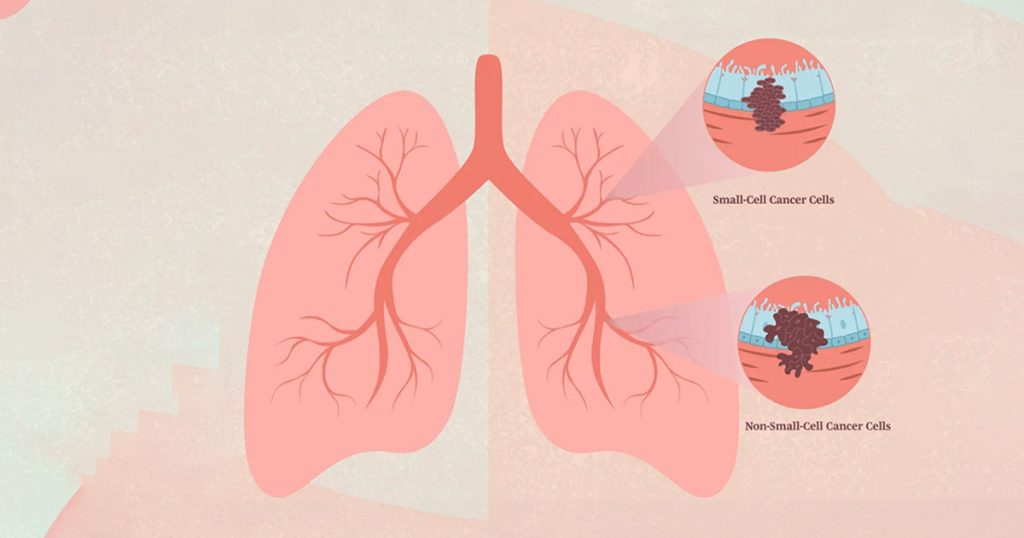
Small Cell vs Non-Small Cell Lung Cancer Treatment

Small Cell Lung Cancer vs Non-Small Cell Lung Cancer Treatment

Understanding the Difference and Finding Hope at Thangam Cancer Center

Small Cell Lung Cancer vs Non-Small Cell Lung Cancer Treatment: Understanding the Difference and Finding Hope at Thangam Cancer Center

Introduction: Understanding the Two Major Types of Lung Cancer

A lung cancer diagnosis can feel overwhelming – not just for the patient, but also for their loved ones. One of the first things doctors explain after diagnosis is the type of lung cancer, because this greatly influences treatment decisions and recovery outcomes.

Broadly, lung cancer is divided into two main types: Small Cell Lung Cancer (SCLC) and Non-Small Cell Lung Cancer (NSCLC). While both affect the lungs, they behave very differently. Understanding these differences and the treatment options available helps patients make informed decisions with confidence and clarity.

At Thangam Cancer Center, we believe knowledge brings comfort and control. With our multidisciplinary oncology team and advanced facilities, we ensure every patient receives personalized, evidence-based, and compassionate care, no matter the diagnosis.

What is Small Cell Lung Cancer (SCLC)?

Small Cell Lung Cancer accounts for about 15–20% of all lung cancers. It tends to grow and spread faster than most other types. SCLC usually originates in the bronchi, the large airways and is strongly linked to cigarette smoking.

Because of its aggressive nature, SCLC is often diagnosed at a later stage, when it may have already spread beyond the lungs. However, modern medicine has significantly improved the way we detect and manage this cancer, allowing patients to live longer and better lives.

SCLC is typically classified into two stages:

  • Limited Stage: The cancer is confined to one lung and nearby lymph nodes.
  • Extensive Stage: The cancer has spread to other parts of the body.

Even though SCLC grows rapidly, it also responds well to chemotherapy and radiation – making early and precise treatment crucial.

Treatment Approaches for Small Cell Lung Cancer

At Thangam Cancer Center, treatment for Small Cell Lung Cancer is customized based on the stage, patient’s overall health, and treatment goals. Here are the most common approaches:

Chemotherapy

Chemotherapy remains the cornerstone of SCLC treatment. Since the cancer cells grow quickly, they tend to respond well to chemotherapy drugs. Combination regimens such as Cisplatin or Carboplatin with Etoposide are commonly used.

Radiation Therapy

For patients with limited-stage SCLC, radiation therapy is often given along with chemotherapy to improve cure rates. Radiation may also be used to treat specific areas such as the brain or bones if cancer has spread there.

Immunotherapy

Recent advancements have introduced immunotherapy drugs like Atezolizumab or Durvalumab, which help the immune system recognize and attack cancer cells more effectively.

Preventive Brain Radiation (PCI)

Since SCLC can spread to the brain even when scans appear clear, some patients may benefit from prophylactic cranial irradiation, a preventive radiation treatment to reduce that risk.

At Thangam Cancer Center, these treatments are planned using advanced imaging and precision technology to ensure maximum effectiveness with minimal side effects. Our focus is not just on controlling the disease, but also on maintaining quality of life throughout the treatment journey.

What is Non-Small Cell Lung Cancer (NSCLC)?

Non-Small Cell Lung Cancer is the most common form of lung cancer, accounting for nearly 80–85% of all cases. Unlike SCLC, NSCLC tends to grow and spread more slowly. It includes several subtypes, such as:

Adenocarcinoma: The most common form, often seen in non-smokers.

Squamous Cell Carcinoma: Typically linked to smoking and found near the central airways.

Large Cell Carcinoma: A less common but fast-growing type.

Because NSCLC progresses gradually, it is often possible to detect it early through low-dose CT scans or other screening tests — which can dramatically improve survival rates.

Treatment Approaches for Non-Small Cell Lung Cancer

Treatment for Non-Small Cell Lung Cancer depends on the stage of the disease, molecular characteristics, and overall health of the patient. At Thangam Cancer Center, our approach combines the latest in medical technology with deep compassion and patient support. 

Surgery

In early-stage NSCLC, surgery is often the first line of treatment to remove the tumor and nearby lymph nodes. Minimally invasive and robotic-assisted surgeries, available at Thangam, ensure precision, faster recovery, and reduced hospital stay. 

Chemotherapy

Chemotherapy may be given before surgery (neoadjuvant) to shrink tumors or after surgery (adjuvant) to eliminate remaining cancer cells. It is also used in advanced cases to control disease progression. 

Radiation Therapy

Advanced radiation techniques such as IMRT (Intensity-Modulated Radiation Therapy) or SRS (Stereotactic Radiosurgery) allow targeted treatment of tumors while protecting surrounding healthy tissue. 

Targeted Therapy

In recent years, targeted therapy has revolutionized NSCLC treatment. These oral medications focus on specific genetic mutations in cancer cells, such as EGFR, ALK, or ROS1, and have shown remarkable results with fewer side effects. 

Immunotherapy

Immunotherapy helps the body’s immune system recognize and fight cancer. Drugs like Pembrolizumab (Keytruda) or Nivolumab are often used for advanced NSCLC and can offer long-term control of the disease in select patients. 

At Thangam, each patient’s treatment plan is created after thorough molecular testing and multidisciplinary consultation, ensuring a personalized, precise, and holistic approach. 

Key Differences Between SCLC and NSCLC

Aspect 

Small Cell Lung Cancer (SCLC) 

Non-Small Cell Lung Cancer (NSCLC) 

Growth Rate 

Rapid; spreads early 

Slower; more localized initially 

Common Cause 

Strongly linked to smoking 

Found in both smokers and non-smokers 


Diagnosis Stage 

Usually advanced at diagnosis 

Often detected earlier 

Treatment Focus 

Chemotherapy and radiation 

Surgery, targeted therapy, immunotherapy 

Response to Treatment 

Responds well initially but may recur 

Slower response but better long-term control 

Prognosis 

Depends on stage, generally more aggressive 

Better outcomes if detected early 

Understanding these differences helps patients and families grasp why treatment plans vary and why personalized care is so essential. 

Factors Influencing Treatment Decisions

Every patient’s cancer journey is unique. Several factors influence the treatment path for SCLC or NSCLC, including: 

  • Stage of the cancer (how far it has spread) 
  • Type and subtype of lung cancer 
  • Overall health and organ function 
  • Genetic or molecular profile of the tumor 
  • Patient’s preferences and goals 

At Thangam Cancer Center, these factors are carefully evaluated during our multidisciplinary tumor board meetings, where specialists across oncology, pulmonology, radiology, pathology, and surgery collaborate to determine the best, most balanced plan for each patient. 

Advancements in Lung Cancer Treatments in India

In recent years, lung cancer treatment in India has seen remarkable progress. From advanced imaging techniques that detect cancer early to cutting-edge targeted and immunotherapies, patients today have more hope than ever before. 

At Thangam Cancer Center, we bring together global expertise and state-of-the-art technology under one roof. Our center offers: 

  • Robotic and minimally invasive surgery for greater precision. 
  • Molecular and genetic profiling to customize therapy. 
  • High-precision radiation systems for accurate targeting. 
  • Access to advanced immunotherapy and targeted drugs. 
  • Comprehensive supportive care from counselling and nutrition to physiotherapy and survivorship programs. 

Our goal is not only to treat the disease but also to help patients live well beyond cancer, with dignity, hope, and strength. 

Conclusion

A diagnosis of lung cancer, whether Small Cell or Non-Small Cell, can be frightening. But with early detection, the right treatment, and expert care, recovery and long-term survival are possible. 

At Thangam Cancer Center, we combine medical excellence with deep compassion. Our team walks beside every patient, helping them understand their options, supporting their emotional well-being, and delivering the most advanced, personalized care available in Tamil Nadu and South India. 

If you or a loved one is facing lung cancer, know this – you are not alone. With the right diagnosis, treatment, and guidance, there is always hope. 
Choose Thangam Cancer Center, where every breath, and every life, truly matters. 

FAQs on Small Cell Lung Cancer vs Non-Small Cell Lung Cancer Treatment

The main difference between small cell lung cancer (SCLC) and non-small cell lung cancer (NSCLC) lies in how the cancer cells look and grow. SCLC has smaller, rapidly dividing cells that spread quickly, often requiring chemotherapy and radiation as the main treatments. NSCLC, which includes types like adenocarcinoma and squamous cell carcinoma, grows more slowly and may be treated with surgery, targeted therapy, or immunotherapy in addition to chemotherapy. Understanding the difference is crucial, as it helps doctors plan the most effective and personalized treatment approach for each patient’s lung cancer type. 

Small Cell Lung Cancer (SCLC) grows faster than Non-Small Cell Lung Cancer (NSCLC). SCLC cells divide and spread quickly, often reaching other parts of the body before symptoms appear. Because of its aggressive nature, it’s usually diagnosed at a more advanced stage. NSCLC, on the other hand, tends to grow and spread more slowly, allowing for earlier detection and potentially curative treatment options like surgery. Early diagnosis of either type is vital, but especially for SCLC, where prompt and specialized treatment can help improve outcomes and quality of life. 

Surgery is rarely used for Small Cell Lung Cancer (SCLC) because this type of cancer spreads quickly beyond the lungs, often before it’s detected. However, in very early-stage cases – when the tumor is confined to one lung and nearby tissues, surgery may be an option, usually followed by chemotherapy or radiation therapy to destroy any remaining cancer cells. Most patients with SCLC are treated with a combination of chemotherapy, radiation, and newer targeted or immunotherapy options. The decision depends on the stage and overall health of the patient, which is best evaluated by an experienced oncology team. 

The latest treatment options for non-small cell lung cancer (NSCLC) include a rich blend of precision medicine, immunotherapy and advanced surgical/radiation techniques. First, molecular testing of the tumour allows your oncologist to identify specific mutations (such as EGFR, ALK, ROS1, MET, RET) and recommend targeted therapy accordingly.  Then, immune checkpoint inhibitors (a form of immunotherapy) that help the body’s immune system attack cancer cells are increasingly used. For early-stage patients, minimally-invasive or robotic surgery and precise radiation (e.g., SBRT) are also key components. At Thangam Cancer Center in Tamil Nadu, we integrate all these cutting-edge treatments with compassionate care and support, ensuring each patient has a tailored treatment plan based on the most current evidence. 

Yes, immunotherapy can be used for both Small Cell Lung Cancer (SCLC) and Non-Small Cell Lung Cancer (NSCLC). These treatments help the body’s immune system recognize and attack cancer cells more effectively. In NSCLC, immunotherapy is often used as a first-line or maintenance treatment, while in SCLC, it is combined with chemotherapy for advanced stages to improve survival. At Thangam Cancer Center, our specialists carefully evaluate each patient’s condition, stage, and biomarkers to design a personalized immunotherapy plan. With advanced facilities and a multidisciplinary approach, we ensure patients receive the most effective, evidence-based lung cancer care with compassion and hope. 

The average survival rate varies between the two main types of lung cancer. Non-Small Cell Lung Cancer (NSCLC) generally has a higher survival rate, especially when detected early – patients in early stages may have a 5-year survival rate of 60% or more after treatment. Small Cell Lung Cancer (SCLC), being more aggressive, has a lower 5-year survival rate of around 7–30%, depending on the stage. However, advancements in targeted therapy, immunotherapy, and precision oncology are improving outcomes. At Thangam Cancer Center, our expert team combines cutting-edge treatments with compassionate care to help patients achieve the best possible survival and quality of life.

Yes – advanced lung cancer treatments are very much available in India, and institutions like Thangam Cancer Center are part of this new-wave of care. Leading Indian hospitals now offer targeted therapies, immunotherapy, robotic and minimally-invasive surgeries, and high-precision radiation techniques for lung cancer. From molecular profiling to personalised treatment plans, you can access many of the same treatment standards found globally. If you or your loved one are facing lung cancer, Thangam Cancer Center provides both technical excellence and compassionate support -so you don’t have to choose between hope and high quality care. 

Scroll to Top

For Emergency

Please call us at:

+91 73732 33333

Call Now